


The Glasshouses
With more than 1000 plant species in their collection, the Birmingham Botanical Gardens glasshouses house many exotic and unusual plants not found anywhere else in the U.K.
Tropical House
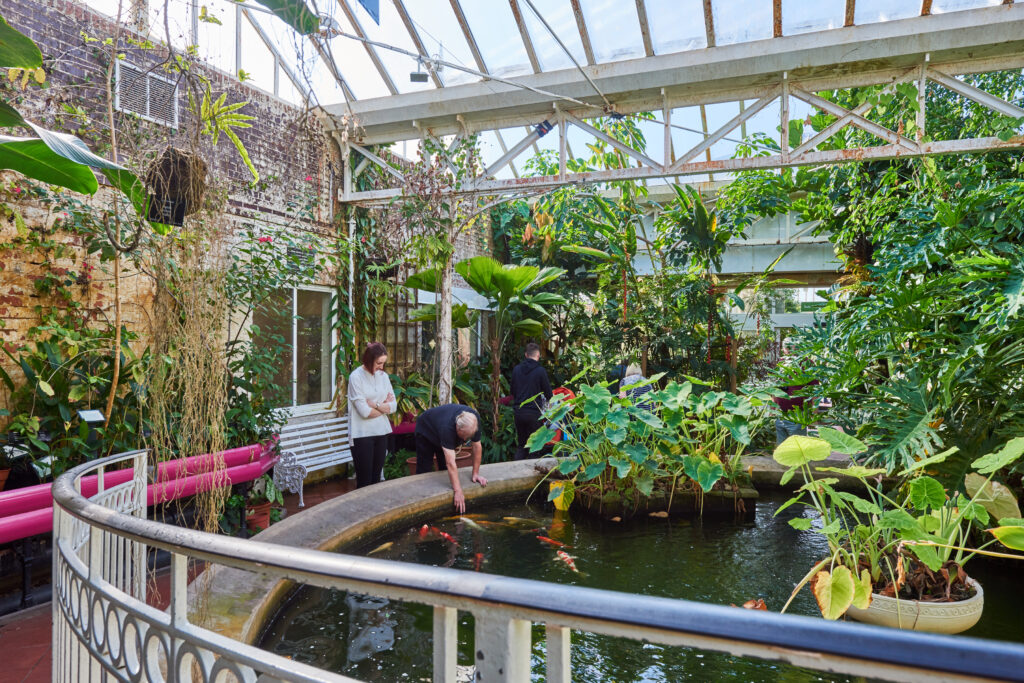
This house has the most varied collection of diverse plants in a small space compared to other parts of the Gardens. The hot, humid atmosphere most nearly simulates the conditions of the lowland equatorial regions of the tropics, and the species grown represent the great variety of life forms which are characteristic of these habitats; trees, climbers, epiphytes -plants that grow on other plants for support, ferns, shade-loving herbs and water plants. It has a minimum winter night temperature of 16°C.
Subtropical House
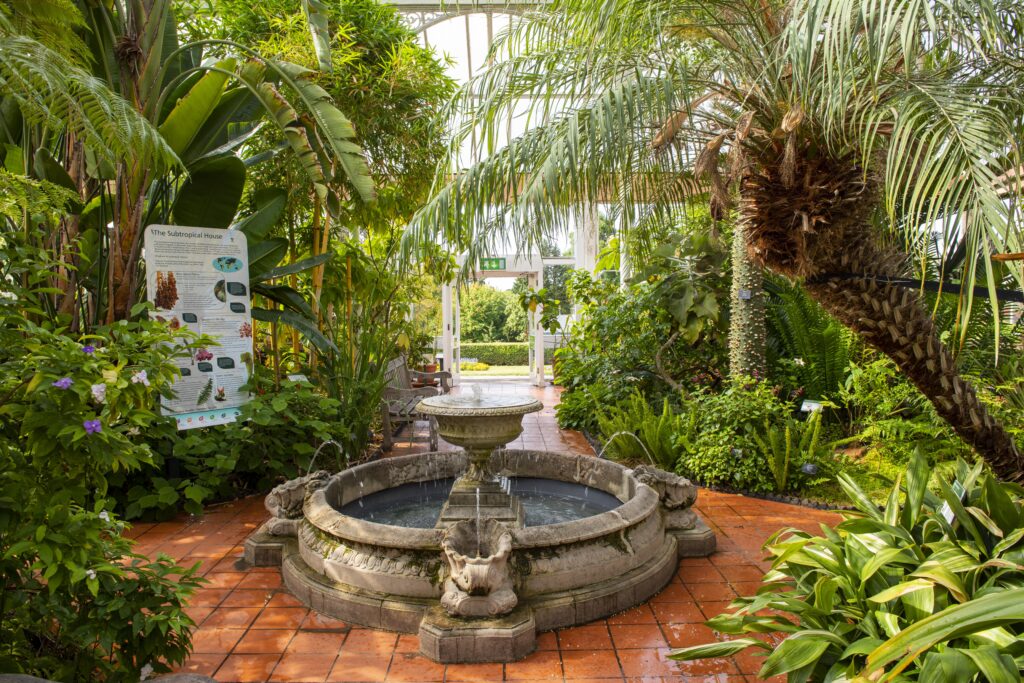
The Subtropical (Palm) House is the largest of our glasshouses, rising to 8′ on top – enough height to accommodate large trees, including palms, tree ferns and a giant bird-of-paradise plant. Dicksonia x lathamii tree fern is unique to the gardens and the only one in the world! Keeping lower temperatures and humidity than the Tropical House, this home closely mimics climates of subtropical regions with a minimum nightly temperature of 13°C.
Mediterranean House
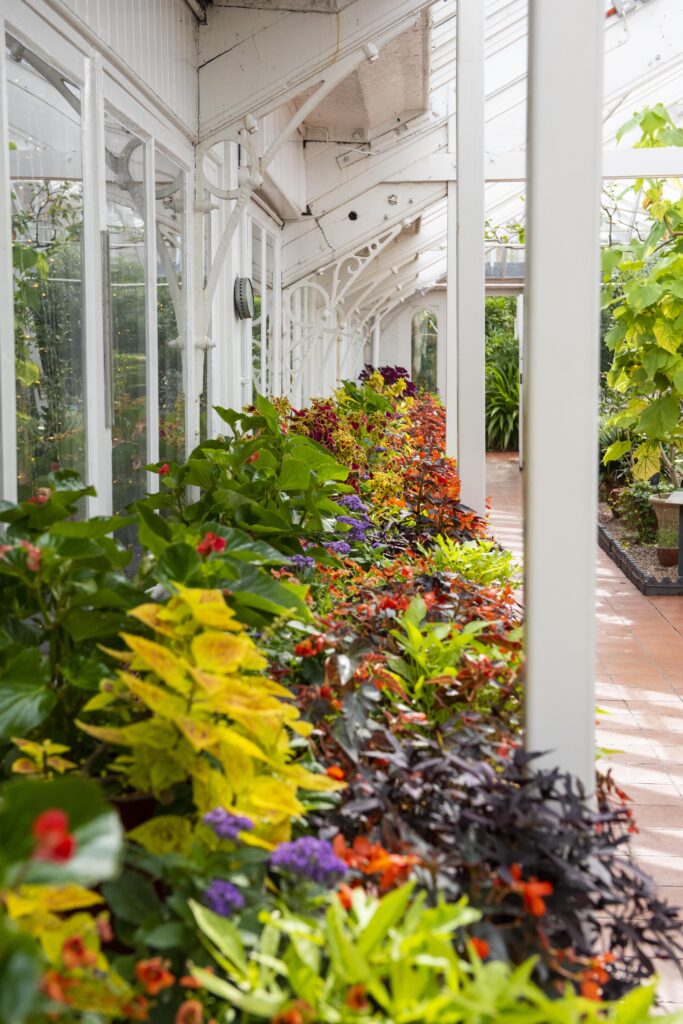
This house preserves some of the atmospheres of a Victorian conservatory or orangery. This early type of glasshouse was popular in wealthy families’ homes throughout the last century. The central beds are planted with a diverse selection of citrus varieties.
On the left, a display of Pelargonium (indoor Geranium) features a collection spanning from the colourful hybrids used as summer bedding plants to the wild species from which they all hail from South Africa and Australia.
A 70-foot (21-metre) long display of unusual and colourful plants creates an amazing show every day of the year. This glasshouse has a minimum nighttime temperature of 10 degrees Celsius, similar to that in the Mediterranean.
Arid House
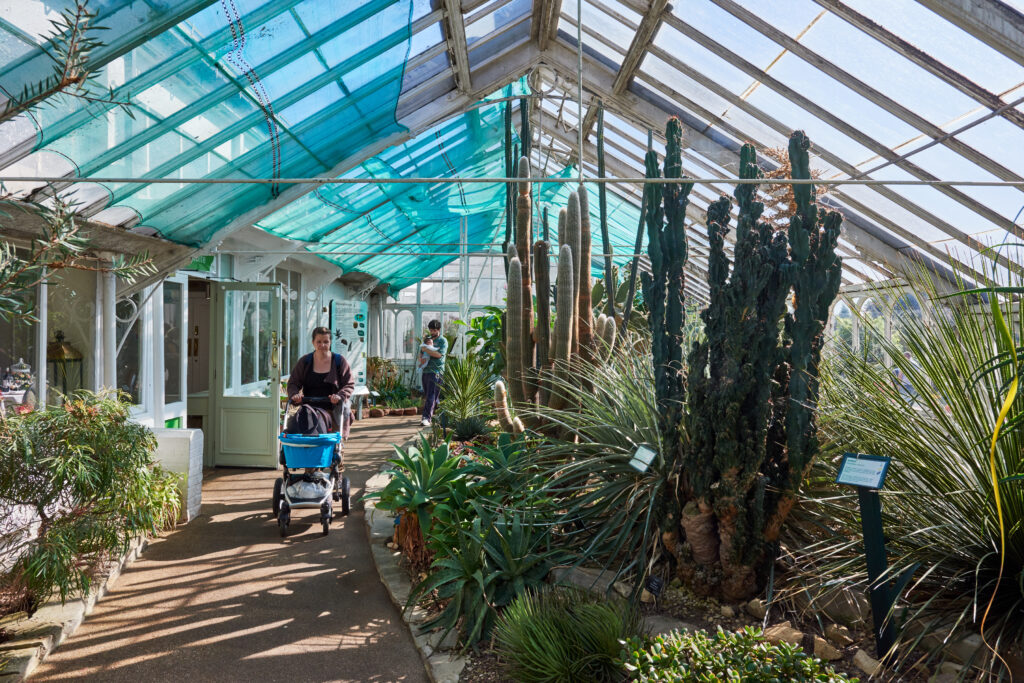
The Arid House is built for plants in climates with low, irregular rainfall and for plants at dry locales like cliffs, deserts, or under tree branches. This house is permitted to maintain ambient temperatures except for low-level heat during frost periods. In the summer, it receives water about three times weekly; from October through March, it reduces to nothing.
Plants range from high-growing cacti and succulents from Central America to drought-tolerant shrubs like mimosa and bottlebrush from Australia, as well as live rock from South Africa. The glasshouse keeps a minimum winter nighttime temperature at 7°C.
Alpine House
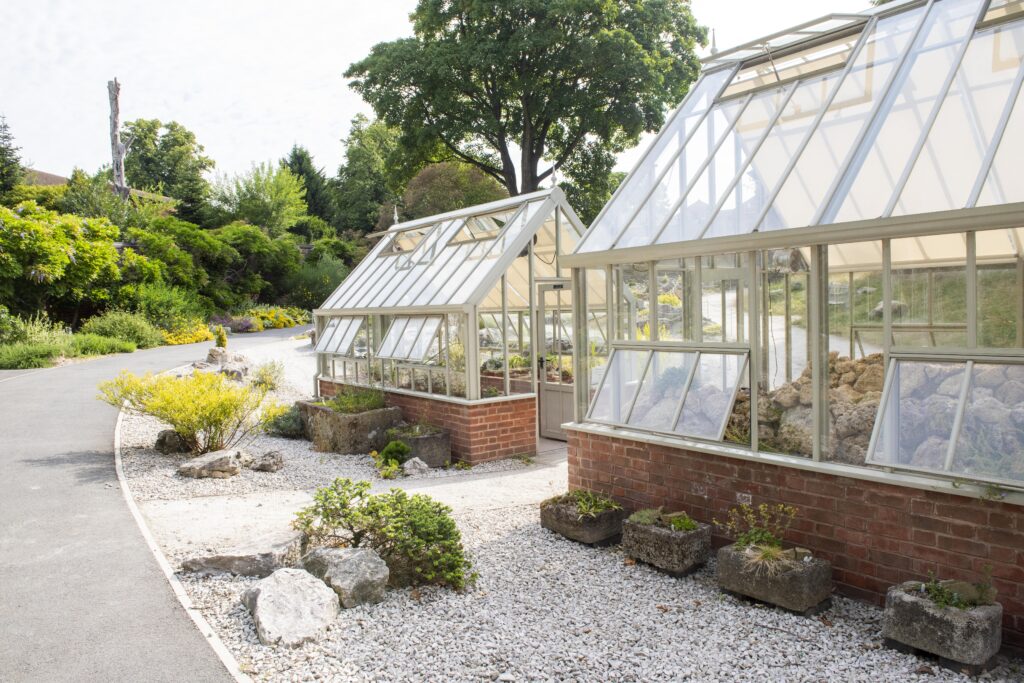
The Alpine House has an ever-changing range of Alpine plant genera from around the world’s mountain ranges. It also allows us to display our award-winning National Cyclamen collection. Alpine plants grow above the treeline on a mountain or hillside.
There comes a point where conditions are not favourable for trees to grow due to exposure or altitude. Alpine plants have adapted to thrive in these conditions by growing as tightknit cushions which hug the rocks or by growing in sheltered crevices. In the wild, many Alpine plants are provided with a blanket of snow that protects them while in their winter `slumber`. This is recreated in the Alpine House by keeping it cool and well-ventilated.
(Hartley Botanics kindly donated this glasshouse to Birmingham Botanical Gardens.)
Butterfly House
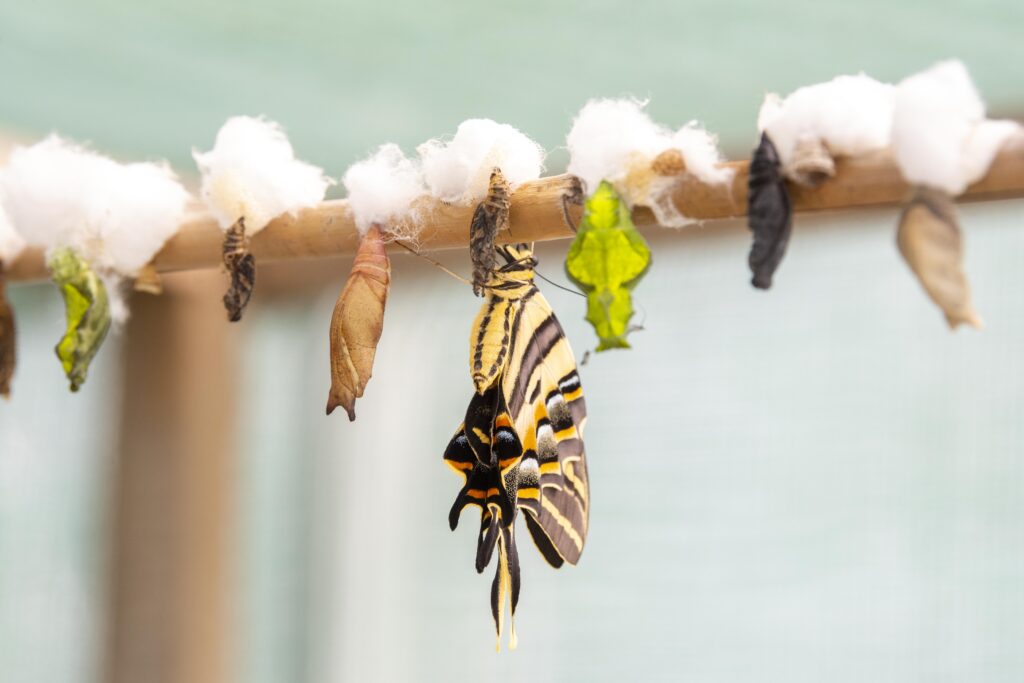
The Butterfly House is home to colourful tropical butterflies from the Philippines, Central America and tropical parts of Africa. Watch these butterflies drinking from exotic, scented, nectar-rich plants such as Lantana, Trachelospermum and Heliotrope.
See them feeding on sugar-water feeders and saucers of fermenting fruit such as bananas, apples and oranges. Each week 100 new pupae are placed in the emerging case- we attach them to bamboo canes with glue! Some of the pupae may hatch on the same day, whilst others take a week or so- if you are lucky, you may see one hatch!
On sunny days, the butterflies will fly around you and may even land on you to say hello. On cloudy days they prefer to rest in the foliage and are camouflaged as ‘dead leaves’. How many will you spot today?
The Butterfly House is located at the far left corner of the gardens and is open every day from late May to early September. From late September to early May, we change this glasshouse to an overwintering glasshouse. This is where, during the winter, we keep our cacti which were planted outside on the Terrace for the summer.
BECOME A MEMBER
If you enjoy visiting the gardens, why not become a member today? Members make a vital contribution to the gardens, and their support means that our staff can continue their work and keep the gardens growing for years to come.
Not only will you receive free unlimited entry to The Birmingham Botanical Gardens, but you will also gain free entry to many other celebrated gardens across the UK. Please visit our Membership page to find out more.